History
I wrote this article so that I can better understand where I started, and where I am now. I just hope it's not a (too) boring read.
Dark Ages
I started to operate a private server back in the very early 2000s. My ambition was to, one day, self-host all my software and provide an official distribution channel for Microprogramming TECHNIQUES. However, it all began by hosting a self-operated second-hand trading platform, where people in the town I lived back then could sell their products. Some sort of classifieds platform. It had a fair share of success, but I haven't monetized that business, and I did everything I could to learn as much as possible about servers, their software, and networking in general.
At the same time, mainstream Internet services were brought to the masses, and I had the privilege to administer a section of one of the two city networks. I remember the feeling when installing an Ethernet switch four meters above the ground, in cold and windy winter weather. It's hard to describe, and I'm not sure these days I'd be doing such work again. But back then, there were no trained technicians and companies to outsource such work to. We had to do everything on our own. And, ad hoc knowledge was well praised. Honestly, I preferred doing a SysOp job at our local DC hub.
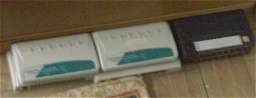
And, by the way, replacing network switches was an often practice. Some were killed by lightning strikes, some due to static electricity that build on aerial cables connecting various neighborhood blocks, but most often damaged by user error. The vast majority of Internet clients were practically untrained in the field, and mishandling RJ-45 cables, causing short circuits, or cutting the wires with scissors to restrict children from using the Internet in rage accesses, or even willingly damaging network infrastructure, just meant more work for us.
There were switches with one, two, or many broken ports, and some even completely fried, smelling like burnt electronics. I liked the Surecom EP-808AX series of switches with metal cases, but they were more expensive than EP-808SX models. Thus, most of them were of the SX variety. I don't remember the blue-black ones what model they were. For additional protection, I used to have a broken switch (one of those with at least two functional ports) as a buffer between the main Internet line and my local network. Thus, I have never experienced any private network interface faults.
But I did other stuff, such as installing a headless Pentium CPU-based machine running at 133 MHz at the biggest local disco, to stream live what the DJ was mixing, through Shoutcast. Knock-knock! Is the cable passing through? I can't believe I still kept this picture! I took it while drilling the hole to route the network cable from the outer nearest switch inside the building. Apparently it was such a novelty that it had to be photographed.
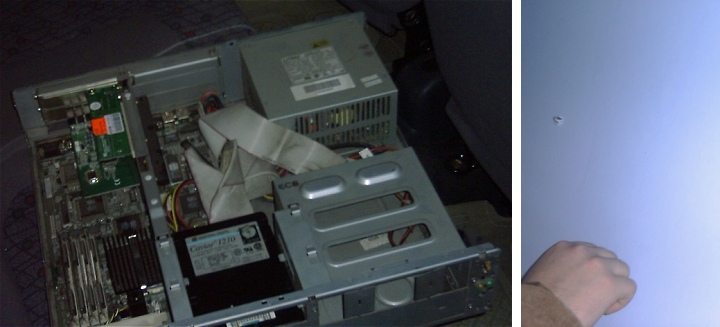
It was easy to make friends as the city was small, and, knowing computers and networking was a big deal.
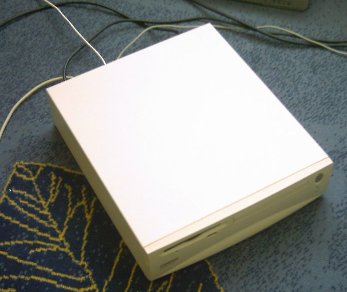
But let's get back to my server operator ambitions. I had no means to buy dedicated server hardware. They went by many thousands of dollars, thus, out of question. I resorted to a Compaq DESKPRO 4000N consumer-class computer that I got for cheap. The HI-NET era effectively started. Besides running Apache for HTTP, YnHub for DC, an FTP server whose name I forgot, I ran a Shoutcast server that I used to "transmit" a radio-like program with audio and small jingles that I recorded in my spare time. I transmitted '80s tracks recorded from reel-to-reel tapes and cassettes. Audio quality wasn't really a thing, and I mostly transmitted at 64 Kbps. Most of the time I played pre-recorded audio programs, but sometimes I was live, on air, as they say in the radio universe. The computer ran Windows 2000, and was equipped with two Ethernet interfaces, one integrated 10 Mbps, and an Intel PCI 10/100 Mbps card. I don't remember exactly, but the machine must've had 128 Mb of RAM.
At some point, that machine became my de facto router and gateway to the Internet for my home network, and all server-related activities moved to enterprise-grade hardware that I acquired for cheap from decommissioned datacenters.
I was constantly looking for new things to learn, and make the most of the knowledge I acquired in the networking field. Again, nothing was monetized. I was totally interested in the educational aspect, and fulfilling my idea of self-hosting the services I needed.
Eventually I gave up DC, Shoutcast, FTP, occasional gaming servers, and other server-related software that I was running. I concluded that I was mostly interested in HTTP and serving content to the world. Thus, I concentrated all my efforts in that direction. I learned how to improve my own sites, how to configure multiple DNS targets, and how to make the content visible to the search engines of those times. I also learned deep search techniques.
Golden Era
As I quickly gathered knowledge, the mid-2000s saw me embracing a more disciplined attitude. I read a lot of network-related literature and technical articles wrote by experienced fellow network engineers and trained technicians.
By 2008, I was self-hosting all my sites. The hardware was an exotic combination of 80486DX4 / 75 MHz, Apple Mac mini G4, IBM eServe x330, and other machines, each serving specific content. Then, I streamlined operations and remained with the Mac mini G4 system. At the same time, I switched name from HI-NET to AGNET. Next, I concentrated my efforts only on software, and left hardware aside for a long period of time.
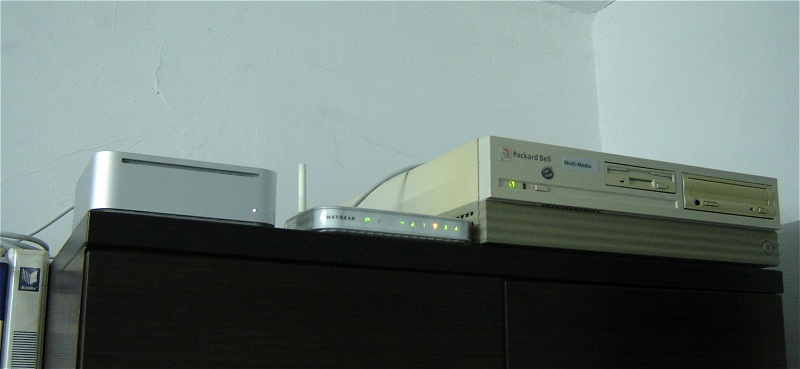
In 2017, I moved all my Internet sites to a datacenter, on a paid subscription plan. That marked the end of large-scale self-hosting. However, parts of the AGNET hardware and software infrastructure remain in operation to this day. Constant updates and modernization made my home network evolve and depart from my initial motivation from the early 2000s.
My old control center (ca. 2010) included a combination of Power PC-based Macintosh computers, mostly G4 and G5 systems, and a few x86 CPU-based machines. I remember I used a software called Synergy to share the mouse and keyboard of the master control computer (a 17" screen HP 4720s laptop equipped with external keyboard and mouse, if my memory still serves) with the rest of the computers. It was mind blowing to seamlessly transition the mouse pointer from one screen to the other as it seemed all of them were connected to the same machine.
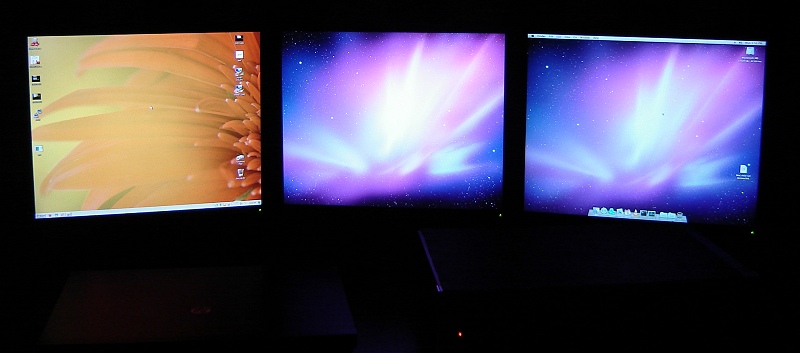
Well, I must say that I used my control center for a whole lot of other things, such as electronics CAD, music processing and recording for my one-man rock band, word processing, and graphics editing. And, of course, a lot of programming and gaming.
I remember I configured a secure L2TP w/IPsec tunnel so that I can administer the G4 Power PC from a distance. I miss OS X both Leopard 10.5.8 and Snow Leopard 10.6.8.
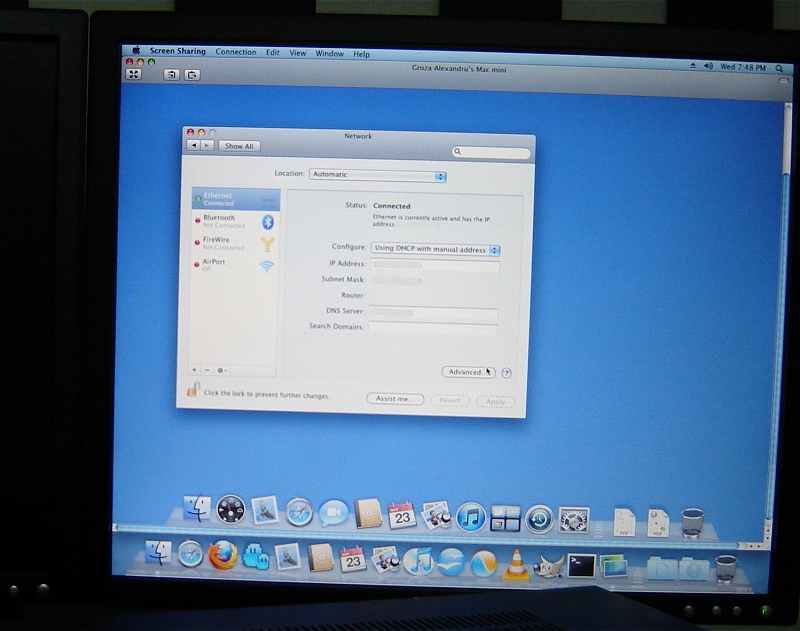
By 2010, I was more into virtualization and hypervisors. That dictated the direction for me to follow when planning my networking infrastructure. Different machines, powerful switches, and a serious UPS slowly made their way along my other networking gear. And then the 2020 pandemic forced me to spend a lot of time at home. Thus, I reorganized AGNET into something else, tailored for work-related activities.
Present
Finally, by 2025, when everything is connected to the Internet, I decided to start building a small network rack, with further plans to extend the rack count, if when needed.
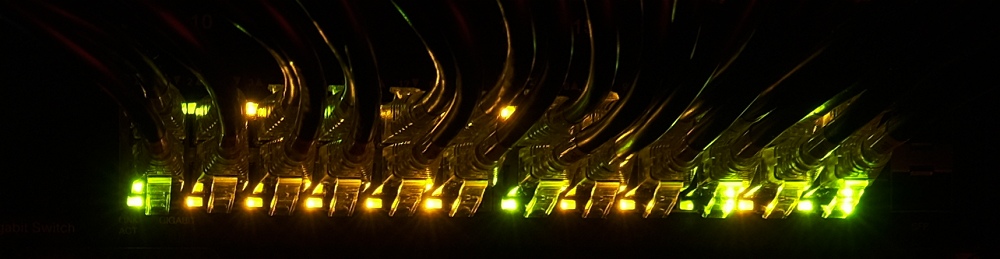
These days, AGNET signifies my home network composed of blueprints, planning, infrastructure, hardware, software, and documentation. I am no longer serving anything to the Internet from within my network. However, I still like to experiment, build servers, plan structured cabling, and upgrade the purpose, equipment, and topology according to my needs.
Future Plans
I don't know what the future reserves, but I plan to invest more time and effort into extending my private network and address as many security holes as I can think of.