Microelectronics | Lacie 5big Network 2 Network Attached Storage
Synopsis
I bought this Network Attached Storage (NAS) back in 2012 to host all my work related VMs, pictures, and computer games. Initially, I wanted to fill up all five bays with 2 Tb drives, but the cost would've been prohibitive. Thus, I bought only two Western Digital Red 2 Tb drives with the thought of adding more as I run out of space. Funnily enough, as of 2020, I still run those two 2 Tb drives in RAID-1 configuration. And I still have about 300 Gb free space. This is filling up quickly these days since both my digital still camera and my mobile phone take pictures at an average size of 6 Mb.
Disclaimer
This article is not to be treated as a do-it-yourself tutorial on how to fix, restore, rebuild, or improve this unit. This was not my initial intention. But you can consider this whole content as a general guideline, should you decide to attempt any service procedure on an identical or similar unit.
The entire documentation is just a reflection of my work and I cannot be held responsible if you damage your unit, or even harm yourself in the process.
Repair
Recently, while I was investigating the possibility of switching the magnetic drives with Western Digital Red 2 Tb SSDs, I found on-line some alarming pictures of the NAS mainboard. People were complaining about capacitor plague. I thought this was an issue of the early 2000s but apparently the early 2010s were also affected. I saw pictures of bulged or leaked electrolytic capacitors.
Frightened enough, I opened my NAS and found out that the disaster had already happened.
There is one supercapacitor rated 1 F / 2.5 V which has leaked electrolyte all over. It completely corroded one of its own legs and some exposed copper. The capacitor top side solder pads are completely eaten away. Thankfully, the bottom solder side is what carries the power tracks. Thus, no problems whatsoever. I can install a new part instead. I believe this capacitor is used for time keeping. But the NAS worked perfectly without it because I have enabled NTP time synchronization.
I cleaned the area as much as I could with acetone, 300 degrees heated flux (weird method, but it works) and mechanical scraping. There is also a quartz crystal in a SMD package which presents some corrosion on the shielding bare copper section behind it. I am thinking of actually completely replacing this with a standard radial package so that I can clean the underneath corrosion. The SMD package is marked EAMC. The first letter is an identifier of the Epson company. The second letter indicates that this is a 32.768 kHz fundamental frequency crystal. The last two letters are actually production date code.

I have used a quality AVX supercapacitor rated 1 F / 2.7 V, in place of the faulty one (branded Nano Force -- say what?). As for the rest of the capacitors, I went with single-ended conductive polymer aluminum solid capacitors made by Kemet. At least these don't leak any electrolyte when their lifespan ends.
The dreaded SAMXON electrolytic capacitors. There should be a place in hell for these junk parts. I would be happily paying $ 10 - $ 20 more for the same product with capacitors coming from a reputable manufacturer. Planned obsolescence? Cost cuttings? Choose your poison.

I can see that the three bulged capacitors belong to the power supply section. These are over-stressed. The other SAMXON capacitors that are used for SATA drive power supply ripple filter circuits are not bulged, yet.

Being aware that corrosion could eat under the soldermask, possibly extending to vital circuit tracks, I decided to replace the quartz crystal. This allowed me to clean the copper under the SMD package. I chose to replace it with a standard radial package quartz oscillator of the same frequency rating, because I already had it around.

That's what the mainboard looks like after the repair.


Solder side.

Junk parts.

With the NAS mainboard fixed, I can restart thinking about solid-state drive replacements. Those two magnetic drives have 8 years of 24/7 operation. Although they still work, they can be considered end-of-life products.
As a side note, I am astounded that they used a 120 mm Noctua fan. I was living under the impression that Noctua is something of a more recent date. Then again, seeing a premium fan in a mass production device is kind of a great surprise. It still even works great without producing any weird noises.
Power Supply Fault
Here we are in 2022, two years after the initial repair. The old NAS was upgraded with all SSD storage media for a total of 8 Tb in RAID-5. It was still going strong until another fault happened.
One late summer day, the switching mode power supply decided to fail hard. A loud bang, some smoke and the apartment mains general automatic circuit breaker immediately engaged, protecting the rest of the equipment. Well, well... glad I was home. Thankfully, nothing caught fire. Apart from my cardiac rhythm, as I was deep into work, and it was very silent in my study.
My initial thought was to ditch the power brick. But then I figured out it has screws. Thus, I opened it and started assessing the situation.
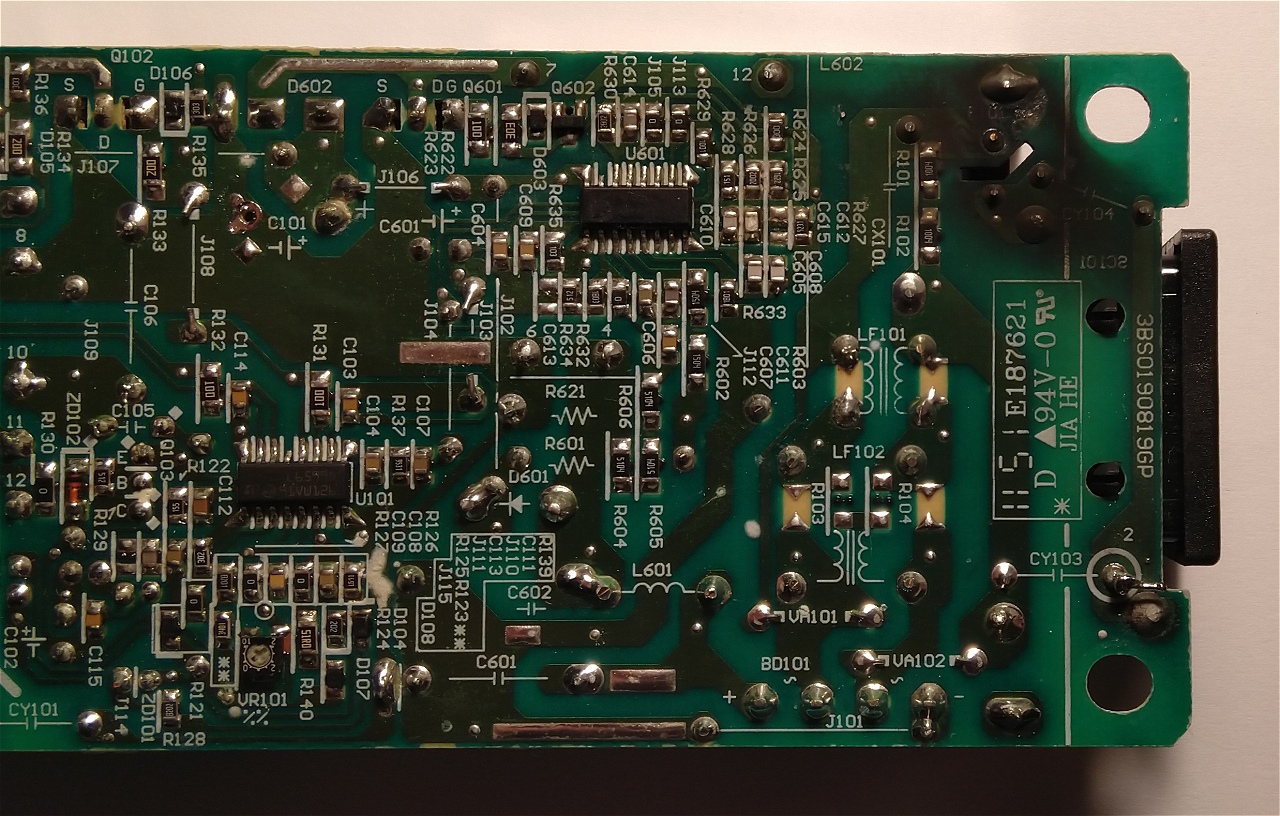
Well done, engineers. This design implements a quality fast-blow fuse which did it's job in a split second. That's what I call a good design. I've seen SMPS circuits catching fire due to bad designs. But not this one, though.
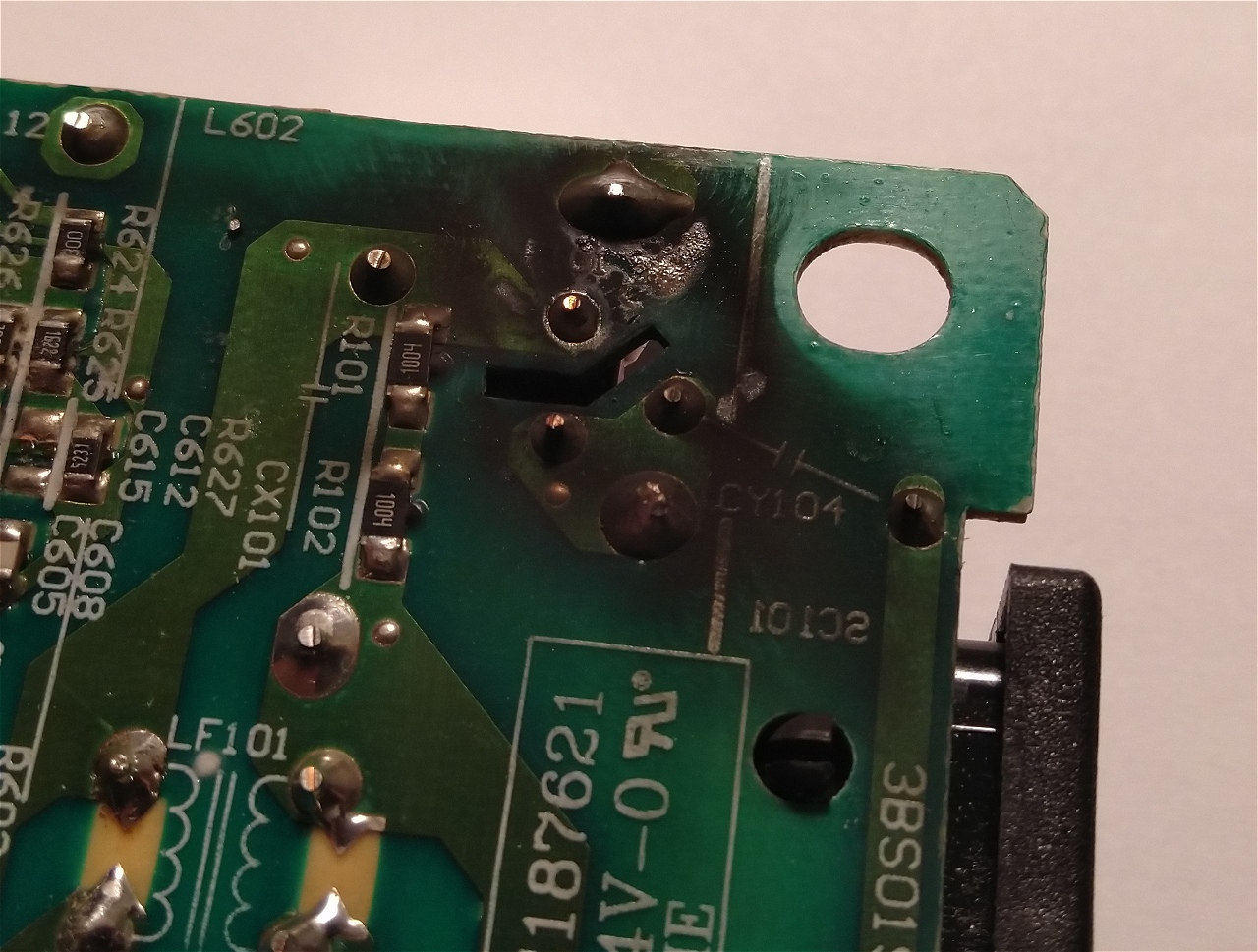
After a thorough optical inspection, I measured around the PCB for faults. Between the usual suspects, I found that the power transistor designated as Q601, was shorted. Any measurement between any of its three terminals results in a reading of 0 Ω, basically a short circuit.
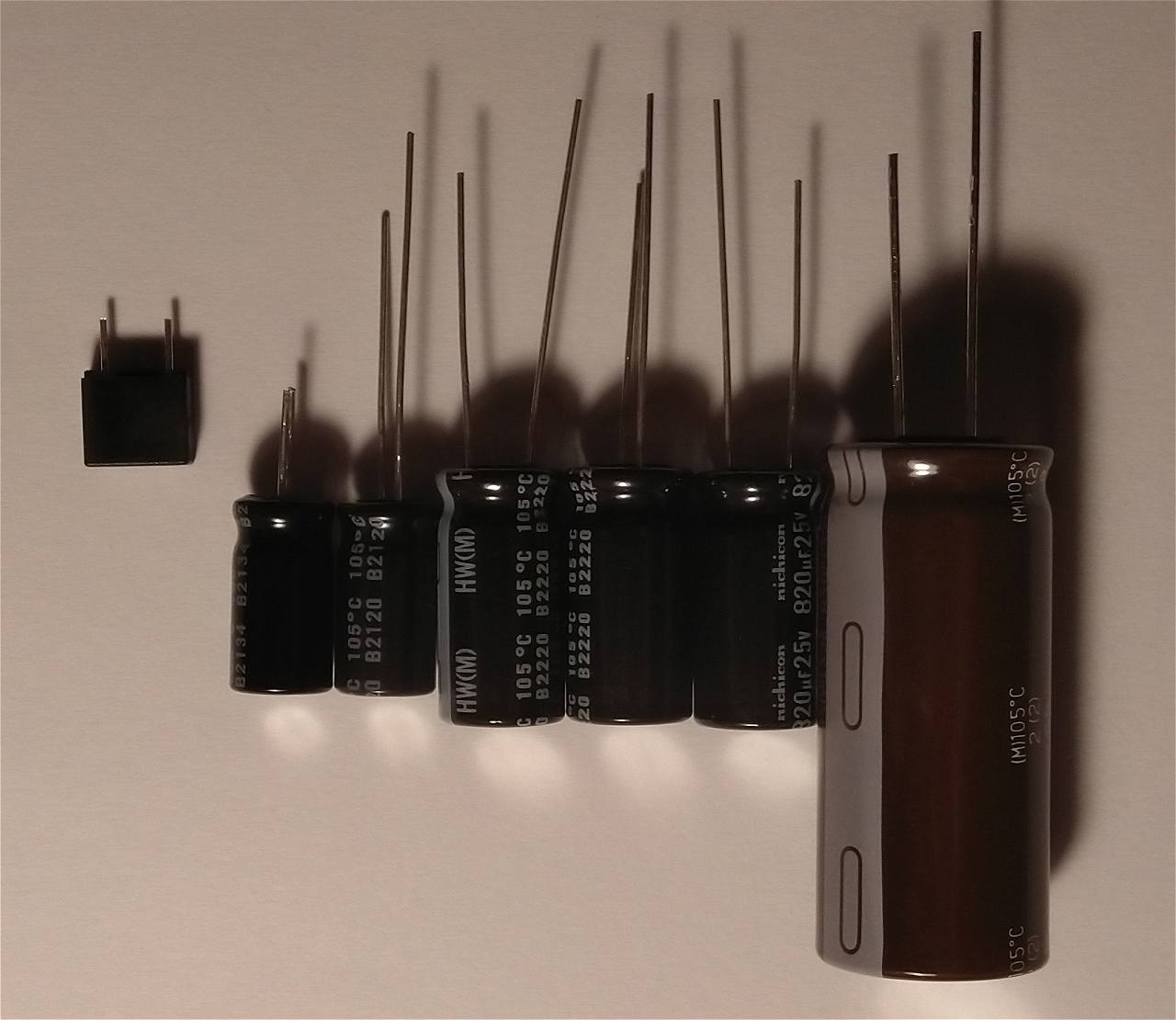
Here are some of the new parts. All quality, long-life Nichicon electrolytic capacitors, designed for switching mode power supplies in always-on operation.
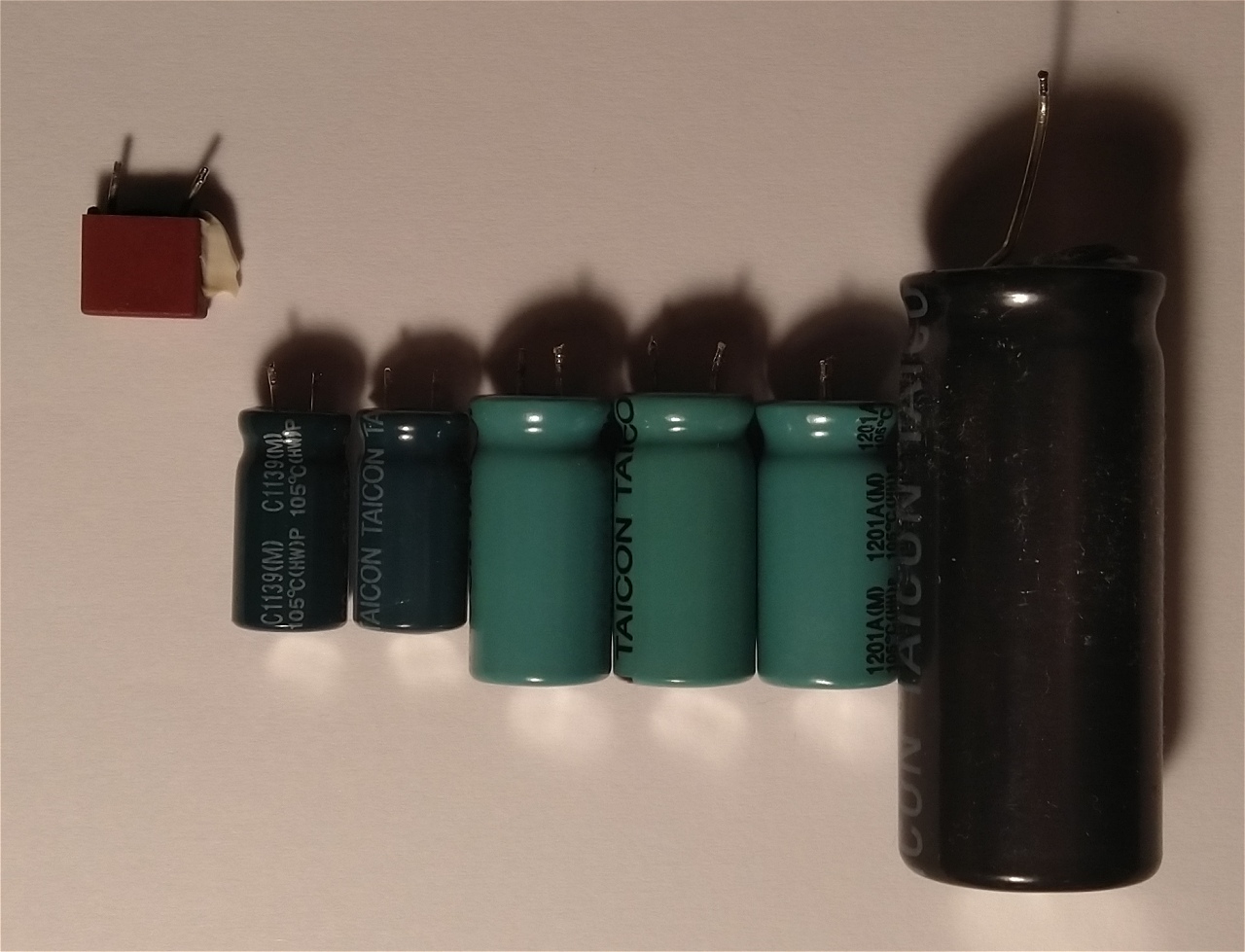
More junk parts. Taicon strikes again. Well, to be honest, I measured the green Taicon parts and, despite high ESR, they measured good. Initially. I programmed the HP 4276A LCZ Meter to measure the capacitors at close to their rated voltage and connected one of the 1000 uF parts, for half an hour. The reading went down to around 900 uF in a linear fashion. In other words, junk.
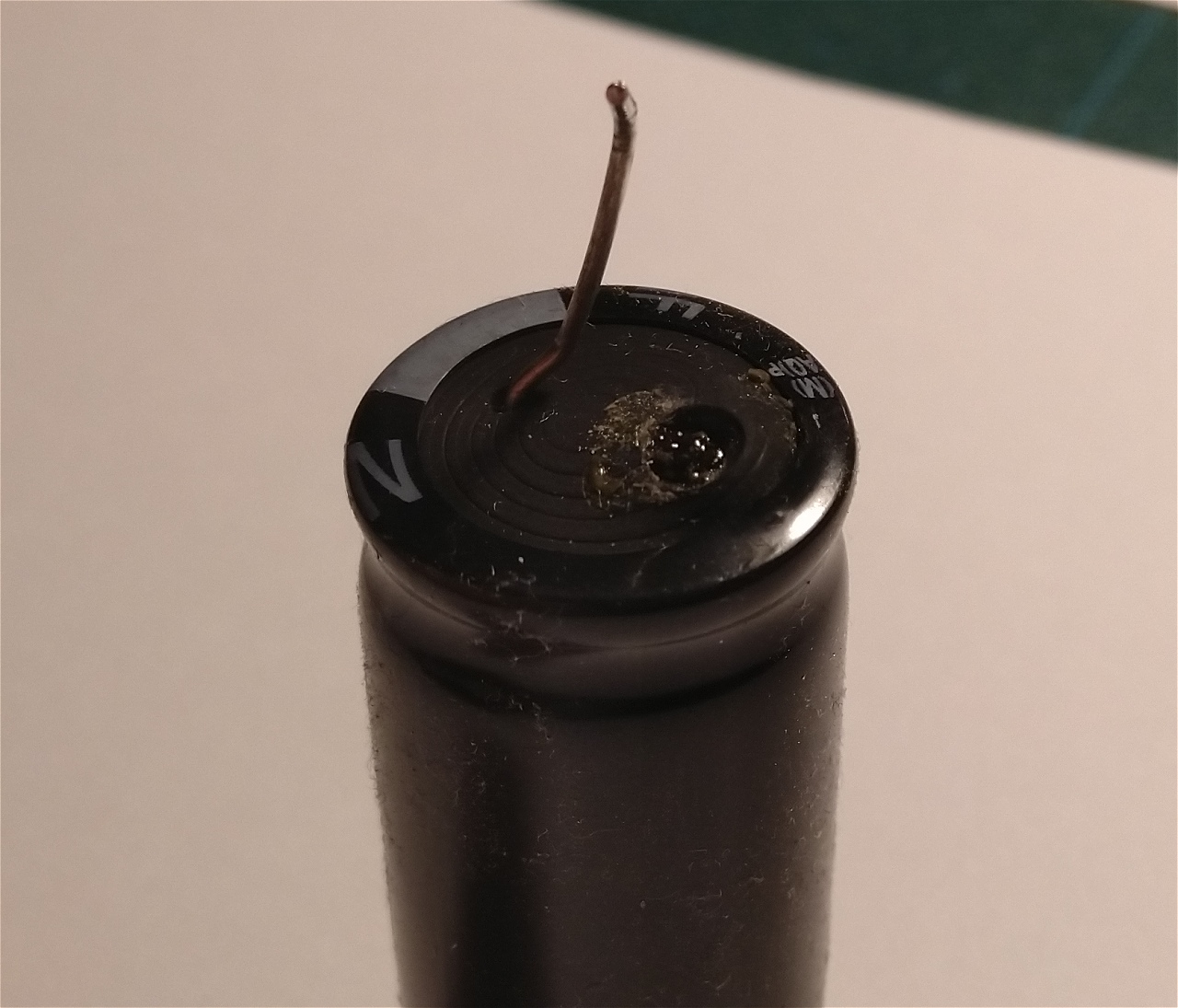
One leg does not exist anymore. It was already completely corroded and the small explosion must've torn it apart. I found it floating around in the plastic enclosure.
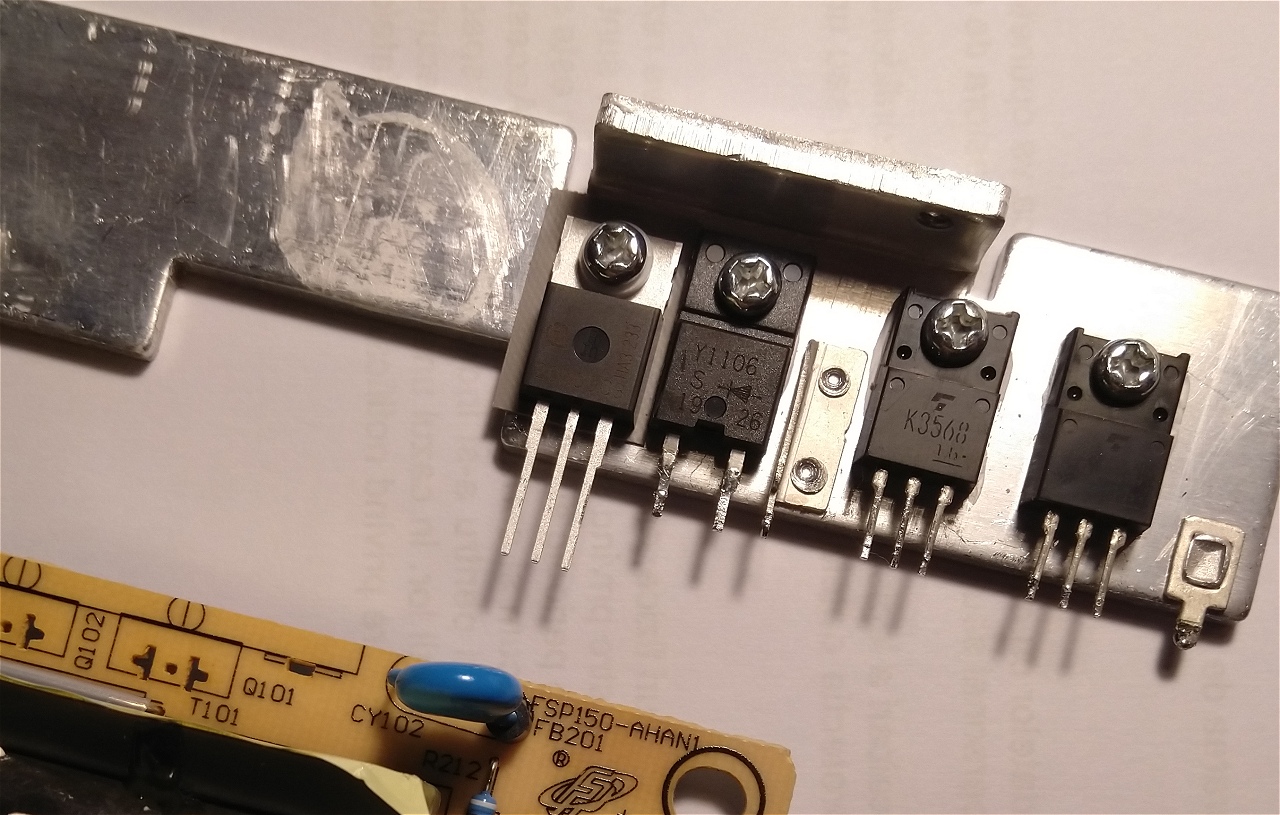
The new 20N60C3 power transistor is in a TO220 package, with the middle terminal connected to the heatsink. I had to use a heat transfer insulator and a Teflon washer so that the screw doesn't make contact with the TO220 package, through the radiator.
The rest of the semiconductors measured good.
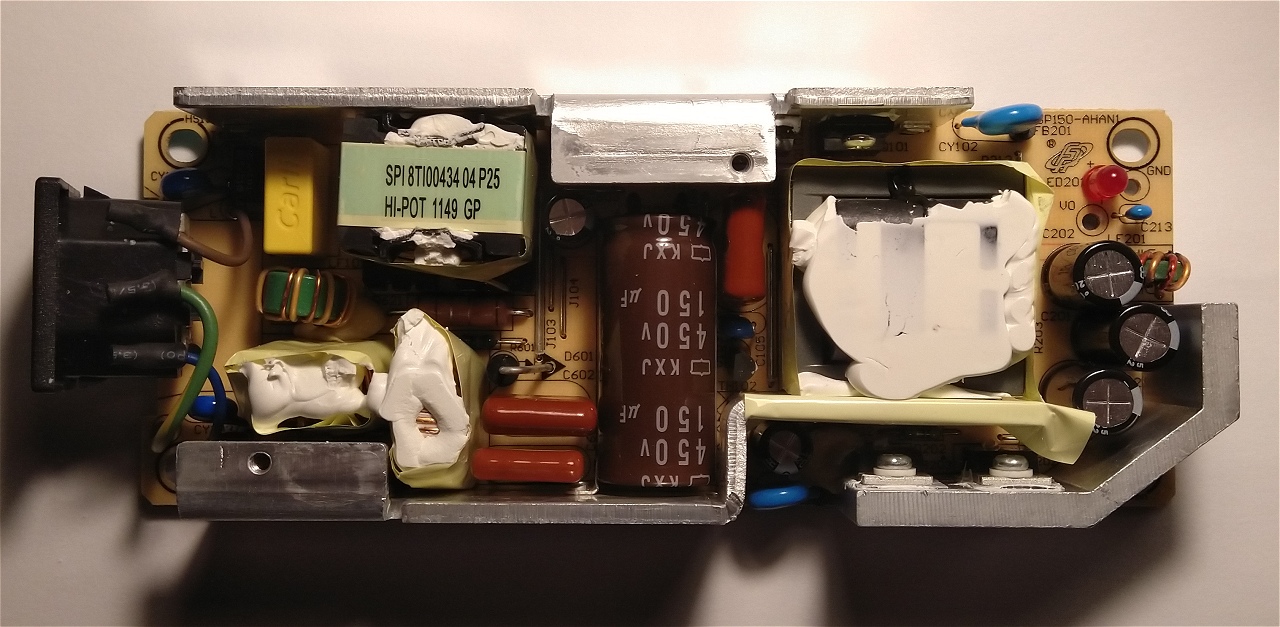
This is the completed power supply. Every failure prone part was replaced. I also found a low wattage resistor (R212) with one of the terminals almost completely corroded. I replaced that one with a new metal film part.
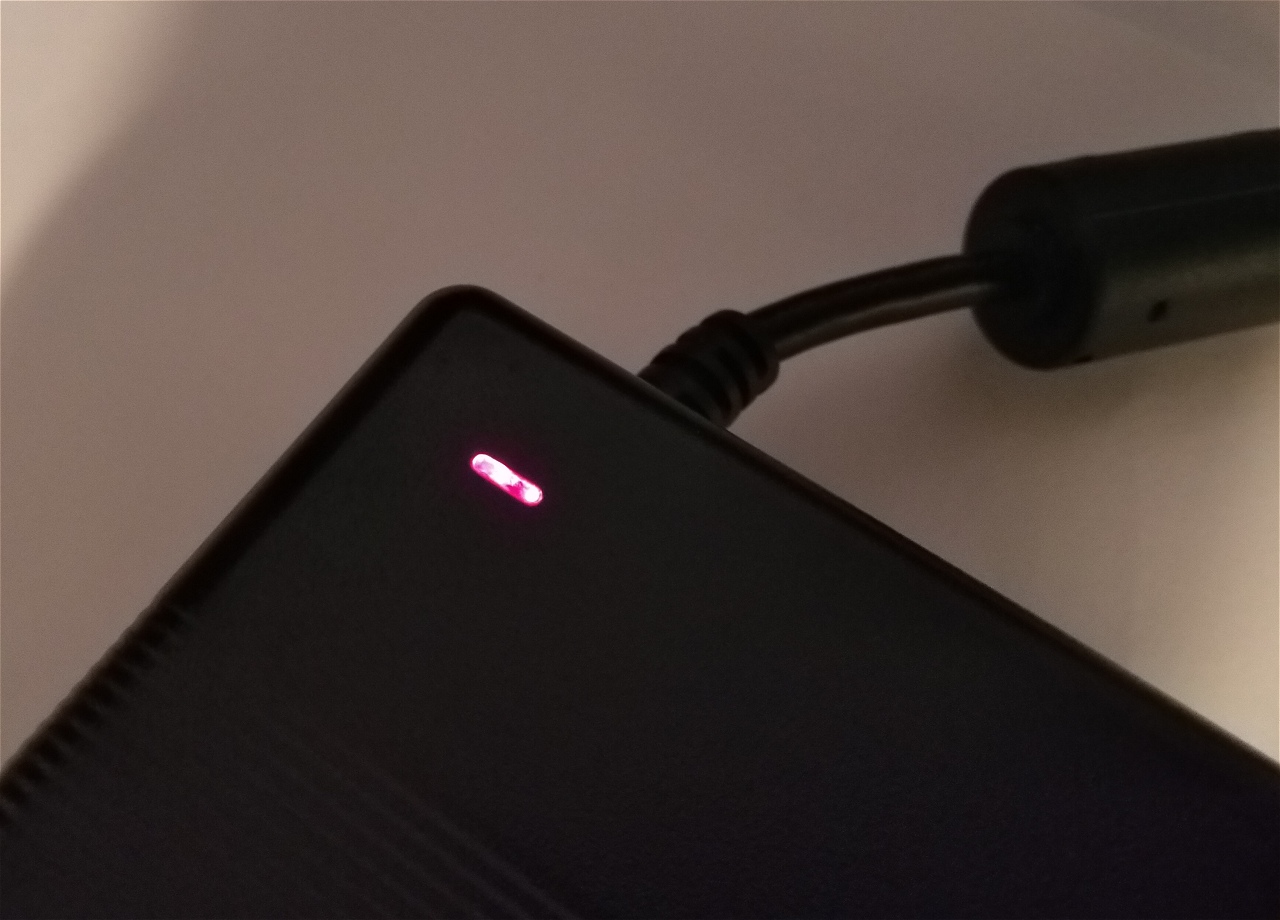
The original LED was blue. I didn't like that so I replaced it with a red LED with a wavelength of around 700 nm.
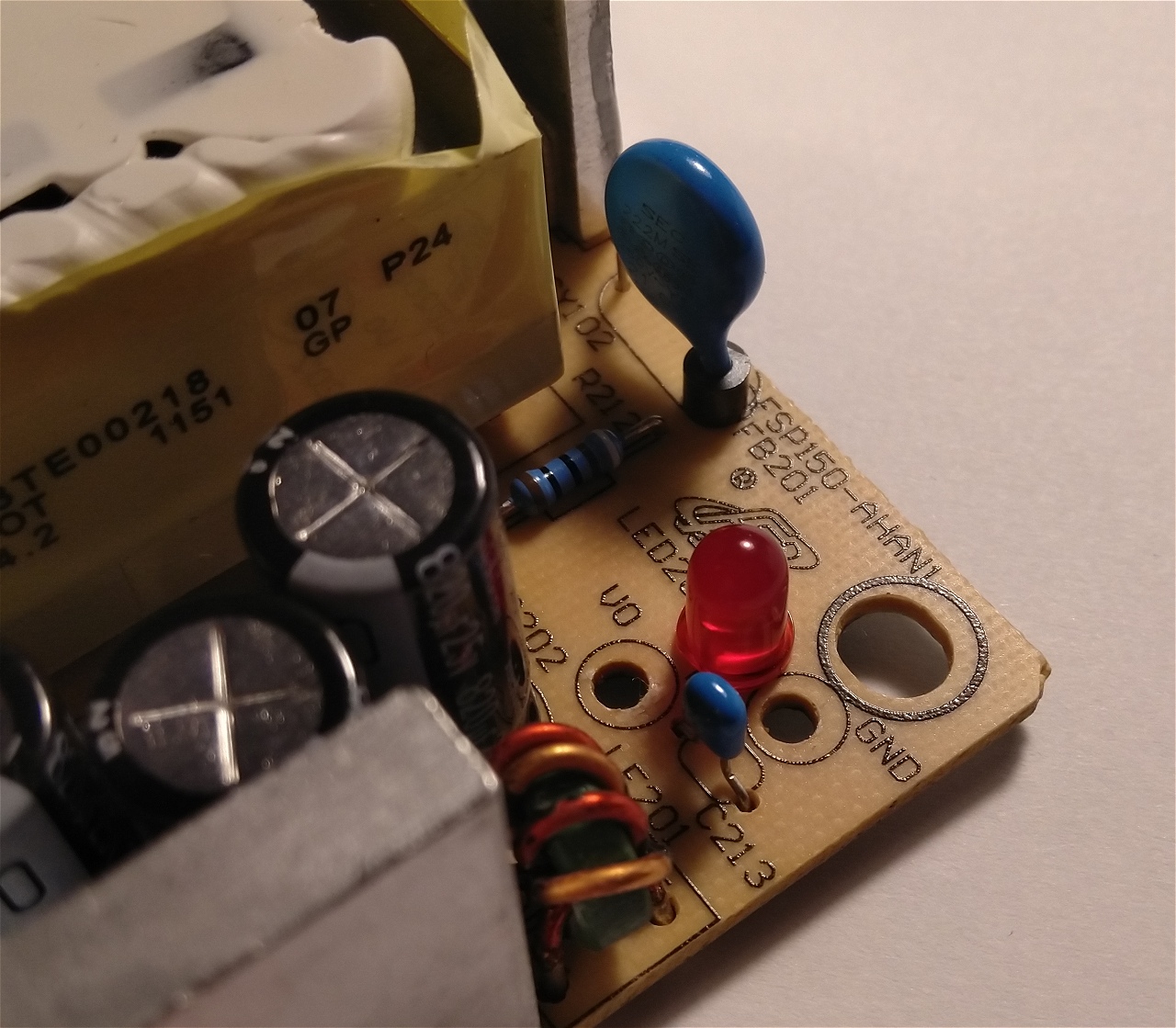
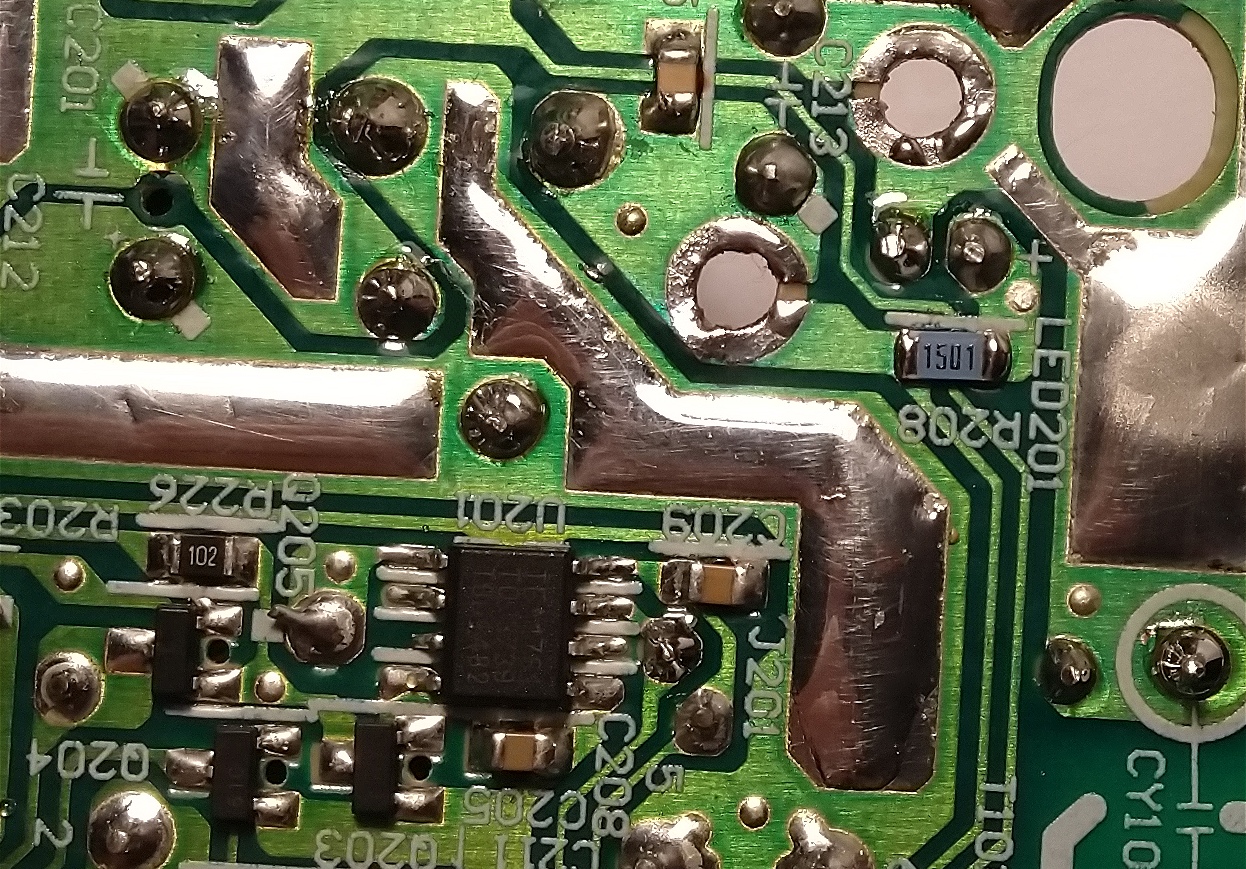
For some reason, the designer of this power supply limited the current through the LED with a 2.7 kΩ resistor. Thus, a very small current (even for red LEDs) flows through the LED, resulting in a low light emission. I replaced that SMD resistor with a 1.5 kΩ which provides enough current through the LED for a solid light emission.
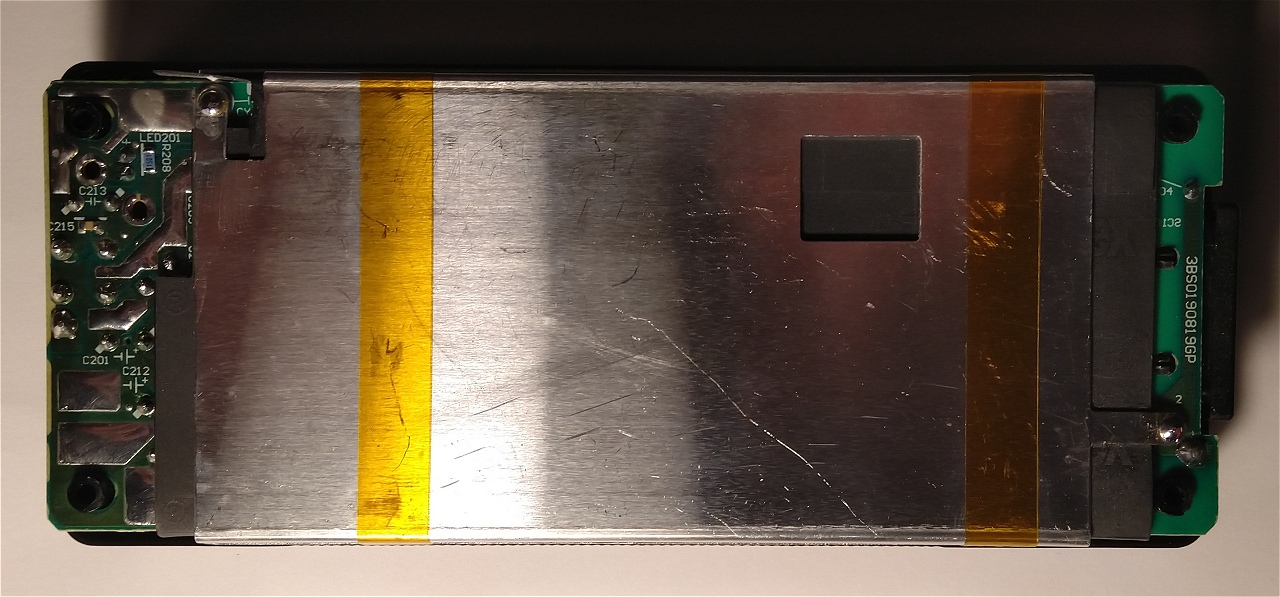
I used some Kapton tape to secure the two sections of the Faraday shielding aluminum cage.
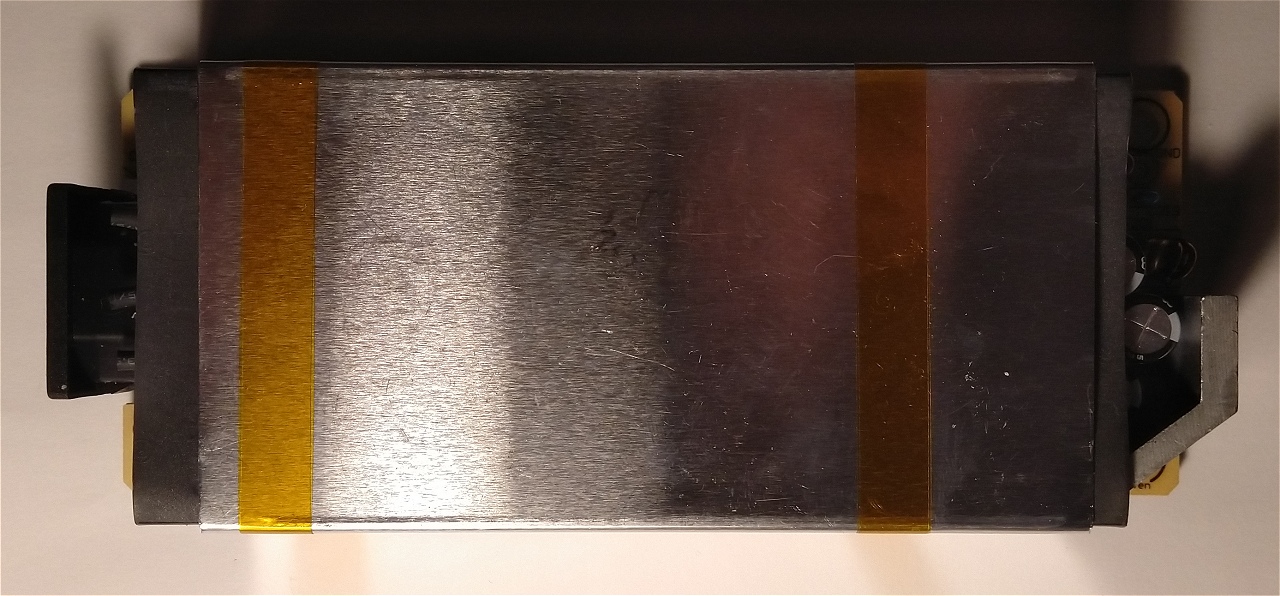
Heres's a top view.
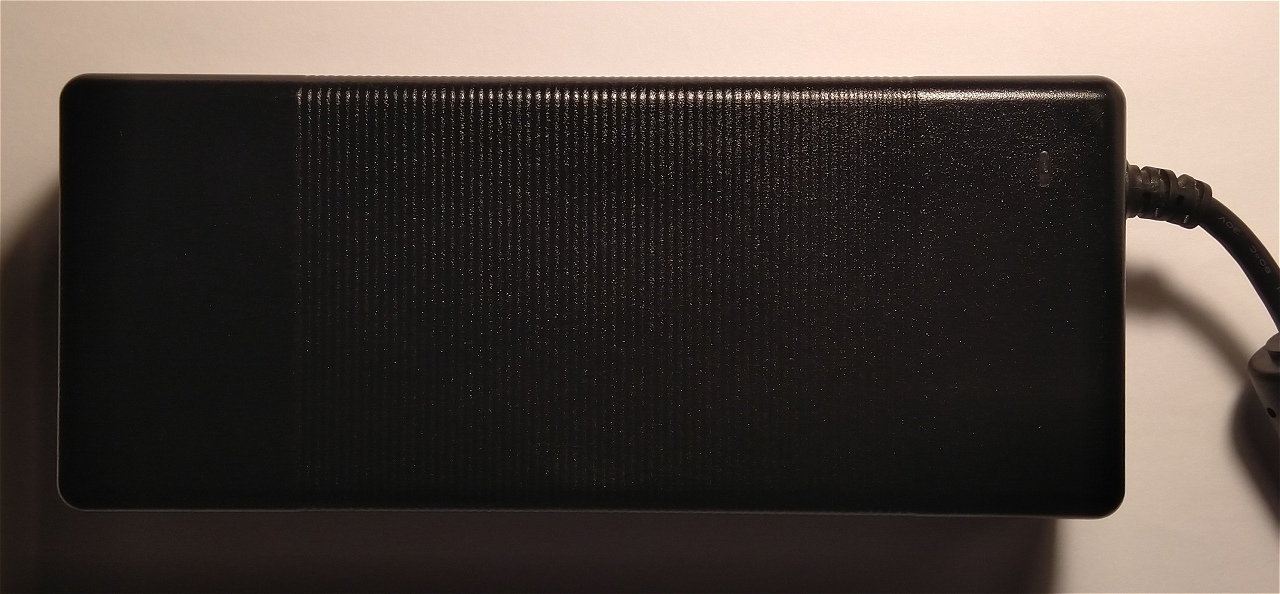
This power supply is completely restored and enclosed in its plastic case.
And here is the red LED lit.
Another job done!
I wish I checked the condition of the power supply capacitors earlier. But thanks to a good power supply design, the fault remained at the PSU level and the NAS and all my data escaped undamaged.
Somehow I understand that after 10+ years, this power supply is considered an end-of-life product and should be tossed in the bin. But with minimal maintenance, I was able to fix it and I expect it to last more than double its initial lifespan.
In the end, an 8 Tb NAS is still nothing short of obsolete even in 2022, let alone 2011 when it was built.
Your Help Matters
This content is provided as-is and is not for commercial purposes. It reflects my experiments and research and should be treated as such. I release my work to the public for educational purposes. I did all this at my own expense and in my free time. So if you like my work, or find it useful or inspiring for your projects, please consider making a donation.
Copyright © 2004- Alexandru Groza
All rights reserved.
VER. 1.0 | REV. A